Horseshoe (Iron Nailed)
Horseshoe — u-shaped iron plate nailed to the hoof wall. Its working principle, historical evidence, and later influence are also examined.

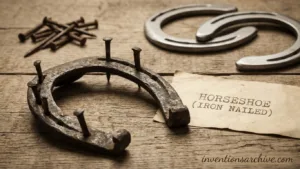
Horseshoe — u-shaped iron plate nailed to the hoof wall. Its working principle, historical evidence, and later influence are also examined.
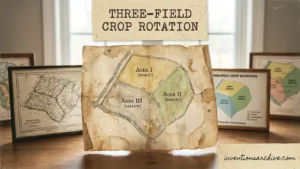
Three-Field Crop Rotation — three-part cycle: winter crop / spring crop / fallow. Historical context and later changes are included.
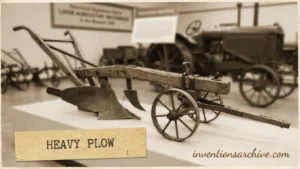
Heavy Plow — deep-turning plough designed to cut and flip heavy, wet soils. The surviving record and later development are also considered.
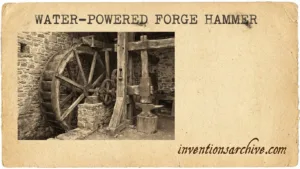
Water-Powered Forge Hammer — waterwheel-driven power hammer for metal forging. The surviving record and later development are also considered.
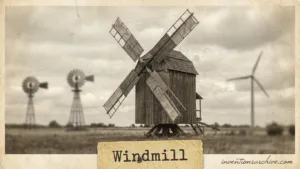
Windmill — wind-driven machine that turns airflow into rotational power. The surviving record and later development are also considered.

Blast Furnace — vertical shaft furnace that smelts iron ore into liquid iron using a pressurized air blast. Its later development is traced.
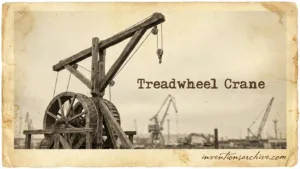
Treadwheel Crane — human-powered lifting crane using a walking wheel to wind a hoist line. Its origin and later influence are also examined.
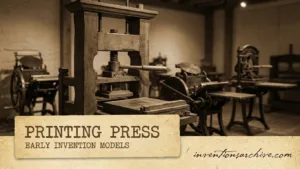
Printing Press is a machine that transfers inked text or images onto paper, parchment, or another surface by applying controlled pressure.
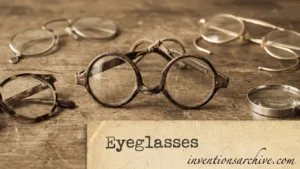
Eyeglasses — wearable lenses held before the eyes to improve focus and make vision clearer. Early evidence and later changes are traced.

Mechanical Clock is a timekeeping device that uses mechanical power, gears, a regulator, and an escapement to divide and display or announce time.
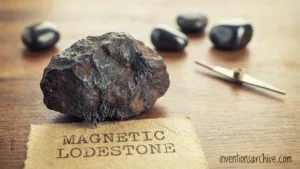
Magnetic Lodestone is a naturally magnetized form of magnetite that attracts iron and can align with Earth’s magnetic field.
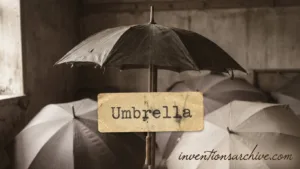
Umbrella is a hand-held portable canopy that opens above the user to provide shade or protection from rain. Its later development is traced.
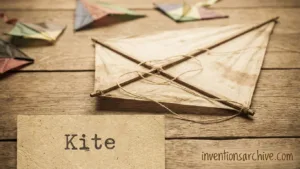
Kite is a tethered flying object that uses wind, a surface, and a line to stay in controlled flight. Its origins and later uses are considered.
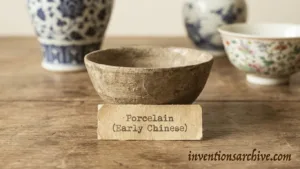
Porcelain is a refined, high-fired ceramic body known for hardness, whiteness, low porosity, and, in many examples, partial translucency.
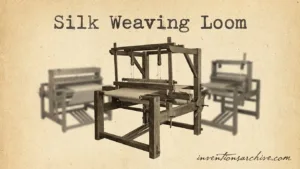
Silk Weaving Loom is a loom adapted to hold fine silk warp threads under tension and interlace them with weft threads to make silk cloth.

Herbal Medicine is the organized use of plants, plant parts, and plant-derived preparations for health-related purposes. Its later development is traced.
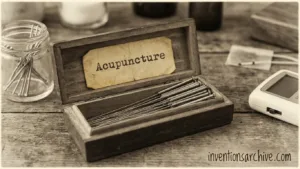
Acupuncture — stimulation of selected body points with fine needles, historically linked to Chinese medical theory. Its later development is traced.
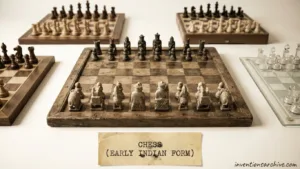
Chess (Early Indian Form) is a strategic board game representing an army on a square board. Historical context and later changes are included.
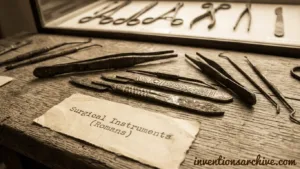
Roman surgical instruments included specialized tools for examination, cutting, gripping, probing, cautery, extraction, and treatment preparation.
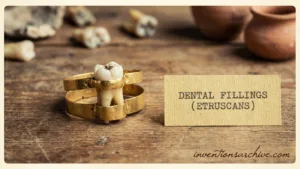
Dental Fillings is a gold-band dental appliance used to replace missing front teeth or stabilize loose teeth; not a modern cavity filling.
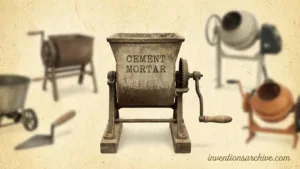
Cement Mortar is a masonry bonding material made from a cementitious binder, fine aggregate, and water. Its historical setting is also noted.
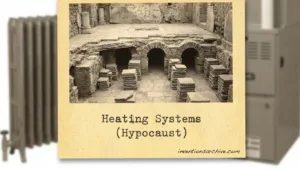
Heating Systems moved hot air from a furnace beneath raised floors and, in later forms, through wall flues. Its later development is traced.
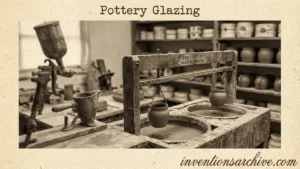
Pottery Glazing is a fired or heat-fixed vitreous surface coating added to pottery or ceramic ware for color, texture, and water resistance.
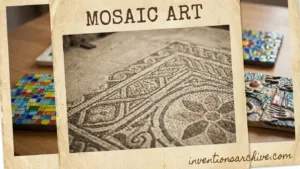
Mosaic Art is a surface decoration method that forms images or patterns from many small pieces of stone, glass, shell, ceramic, or other colored material.

Road Relay Stations — planned stopping points on roads where messengers, animals, documents, or travelers could be transferred, rested, supplied, or recorded.
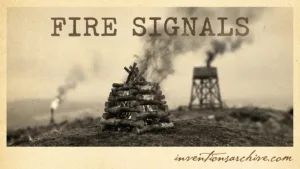
Fire Signals — long-distance visual communication using visible flame, torchlight, lantern light, or smoke. Its later development is traced.
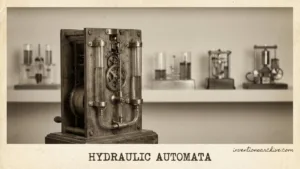
Hydraulic automata used water, air pressure, floats, valves, siphons, and weights to trigger self-acting movement, timing, sound, or display.
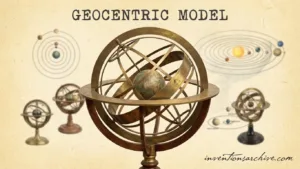
Geocentric model is an Earth-centered astronomical model where the Sun, Moon, visible planets, and fixed stars were understood to move around Earth.
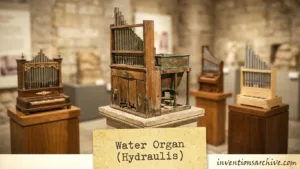
Water Organ is a mechanical pipe organ that used air pressure stabilized by water to sound a set of pipes. Its later development is traced.
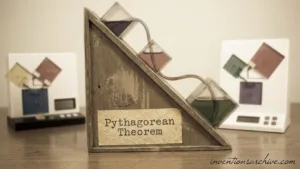
The Pythagorean theorem relates the sides of a right triangle: the square of the hypotenuse equals the sum of the other two squares.