Screw
Screw is a helical form used to fasten, lift, press, move, or measure by turning. The surviving record and later development are also considered.

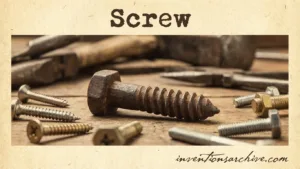
Screw is a helical form used to fasten, lift, press, move, or measure by turning. The surviving record and later development are also considered.
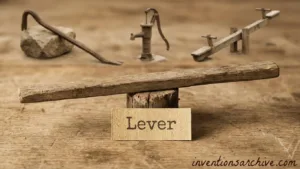
Lever is a rigid bar or body that turns around a fixed point to move, lift, balance, press, or control a load. Its later development is traced.
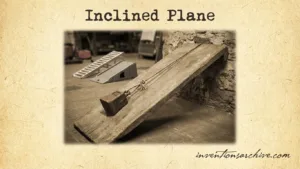
Inclined Plane is a sloping surface used to raise, lower, or guide a load with less direct force. Its origins and later uses are considered.
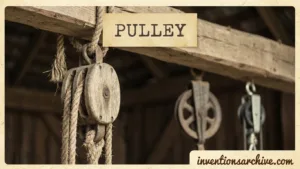
Pulley is a wheel or sheave that guides a rope, cord, cable, chain, or belt to change force direction, lift loads, or transmit motion.

Gear is a toothed wheel or toothed element that meshes with another toothed part to transmit or change rotary motion and torque.
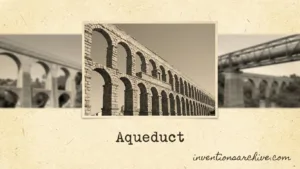
Aqueduct carries water from a source to a place where people, farms, workshops, or cities need it. Early evidence and later changes are traced.
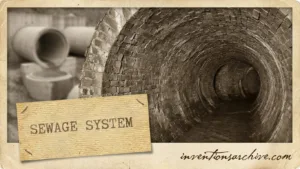
Sewage System is a planned network for collecting and carrying wastewater, sewage, and sometimes stormwater away from buildings and streets.
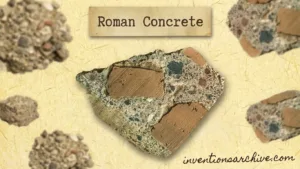
Roman Concrete is a Roman building material made from lime-based mortar and rubble aggregate, often strengthened with volcanic ash or crushed ceramic.
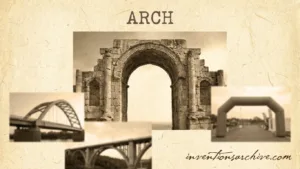
Arch is a curved or angled structural form that spans an opening and carries weight toward side supports. Its historical setting is also noted.
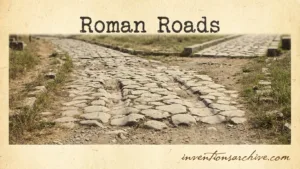
Roman Roads — engineered land routes built and maintained for Roman movement, administration, trade, and communication. Its later development is traced.
Map is a symbolic representation of places, routes, boundaries, distances, or spatial relationships. Its later development is also traced.
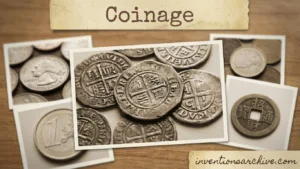
Coinage — standardized metal money issued with an authority mark, weight system, and recognized value. Its historical setting is also noted.
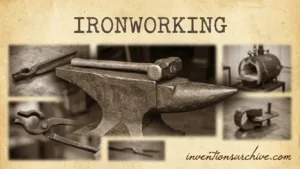
Ironworking is the craft of extracting, shaping, refining, and using iron for tools, fittings, structures, and other durable objects.
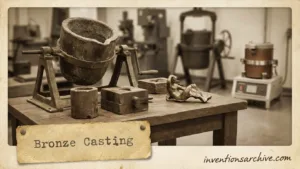
Bronze Casting — shaping bronze by letting molten copper alloy harden inside a prepared mold. Its origin and later influence are also examined.
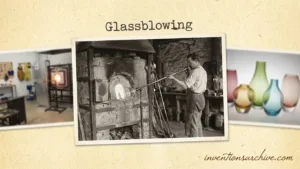
Glassblowing is the shaping of softened glass by inflating it through a hollow tube called a blowpipe. Its historical setting is also noted.
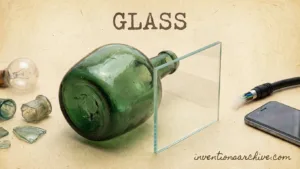
Glass is an amorphous material formed by melting silica-rich ingredients and cooling them without crystallization, with early evidence and uses traced.
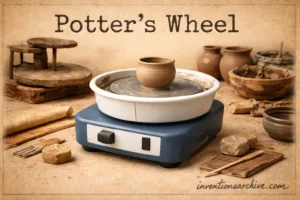
Potter’s Wheel is a rotating device used to shape clay vessels, especially rounded ceramic forms. Its origins and later uses are considered.
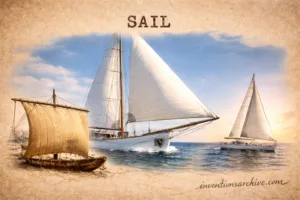
Sail is a shaped sheet of textile, matting, skin, or later engineered material used to capture wind and help move a vessel. Its later development is traced.
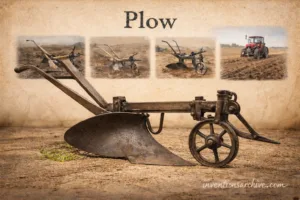
Plow is a soil-working implement used to cut, loosen, break, or turn earth before planting. Its origin and later influence are also examined.
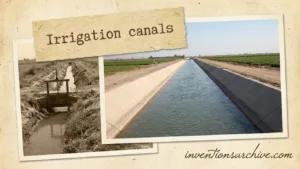
Irrigation Canals — artificial open channels used to move water from rivers, reservoirs, springs, or other sources to farmland.
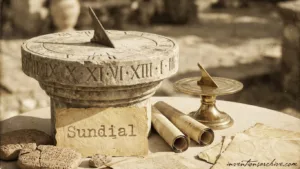
Sundial uses the Sun’s apparent movement and the shadow of a gnomon to show local solar time. Early evidence and later changes are traced.
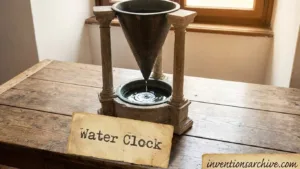
Water Clock is a time-measuring device that uses the regulated flow of water into or out of a vessel. Its historical setting is also noted.
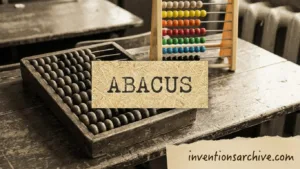
Abacus uses movable counters, beads, pebbles, or discs to represent numbers and perform arithmetic. Its later development is also traced.
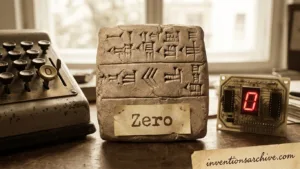
Zero is a numerical symbol and concept used to represent nothing, absence, empty place value, and additive identity. Its later development is traced.
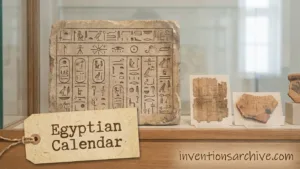
Egyptian Calendar is a 365-day civil calendar used in ancient Egypt to organize dates, seasons, records, festivals, and administration.
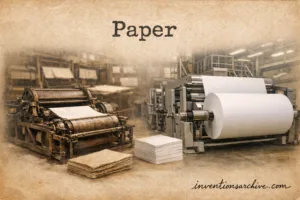
Paper forms thin sheets from plant or textile fibers suspended in water, with early evidence, production methods, uses, and later development traced.
Ink is a pigmented or dye-based substance used to make lasting marks for writing, drawing, printing, labeling, and record keeping.
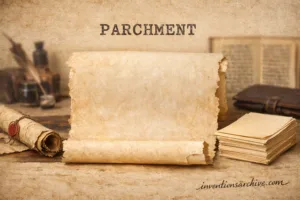
Parchment — prepared animal skin used as a durable writing, manuscript, legal, and artistic surface. Its historical setting is also noted.
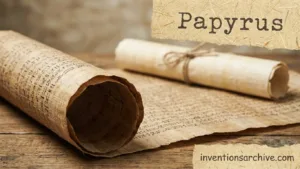
Papyrus is a plant-based writing material made by layering, pressing and drying strips from the pith of the papyrus plant. Its later development is traced.
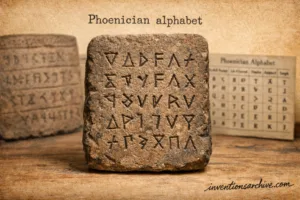
Phoenician Alphabet is a 22-letter consonantal writing system used by Phoenician speakers and closely related West Semitic communities.