Magnetometer (Early Form)
Magnetometer (Early Form) — instrument for measuring magnetic field direction and strength. Historical context and later changes are included.

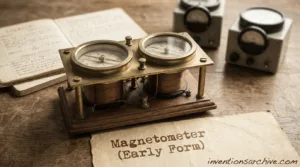
Magnetometer (Early Form) — instrument for measuring magnetic field direction and strength. Historical context and later changes are included.
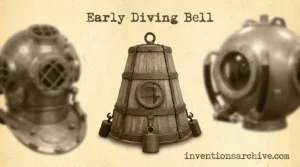
Early Diving Bell — inverted chamber that traps air so people can pause, breathe, and work below the surface. Its later development is traced.
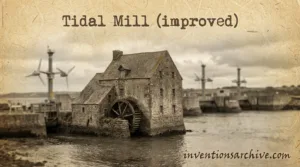
Tidal Mill is a tide-driven watermill that stores high-tide water in a pond, then releases it through a wheel and gearing to grind grain.
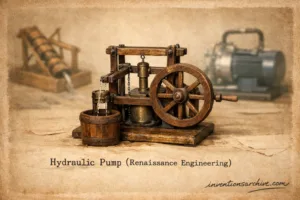
Hydraulic Pump (Renaissance Engineering) — machine that raises or moves water by converting mechanical input into fluid pressure and flow.
Optical Glass Lens Production — industrial production of optically homogeneous glass and precision-shaped lenses for controlled refraction and imaging.
Early Microscope Lens Grinding — early optical craft of shaping and polishing small glass lenses for microscopes. Its later development is traced.
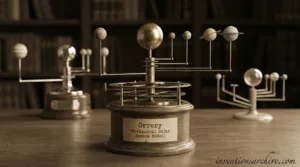
Orrery — mechanical model showing solar system motions. Early evidence, practical use, and later technical changes are traced in context.
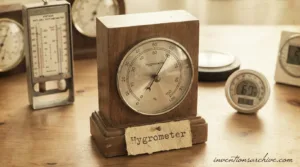
Hygrometer — instrument that measures air humidity. Origins, construction, practical use, and later development are set in historical context.

Steam Digester (Papin) — sealed steam vessel for high-pressure cooking and bone softening. Historical context and later changes are included.

Leyden Jar — early capacitor that stores static electric charge (Details-2). The surviving record and later development are also considered.
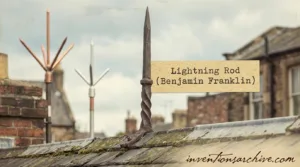
Lightning Rod — metal air terminal that helps route lightning current safely into the ground. Early evidence and later changes are traced.
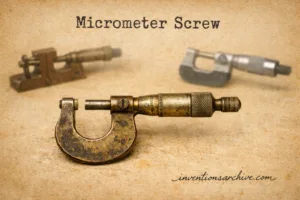
Micrometer Screw — precision screw mechanism that converts rotation into very small, measurable linear motion. Its later development is traced.
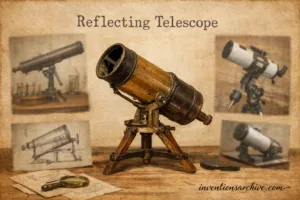
Reflecting Telescope — optical telescope that gathers and focuses light with mirrors (not a primary lens). Its later development is traced.
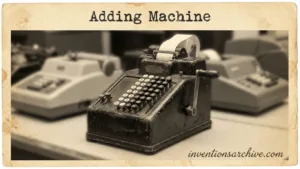
Adding Machine — office machine for fast totals and repeatable arithmetic. The surviving record and later development are also considered.
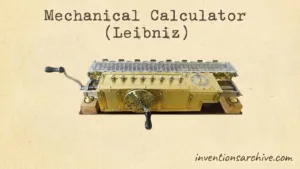
Mechanical Calculator is a gear-driven calculator that mechanizes addition, subtraction, multiplication, and division with a stepped-drum mechanism.
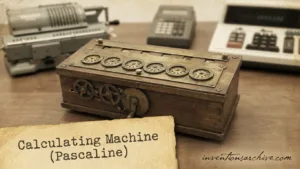
Calculating Machine — mechanical calculator for addition and subtraction with an automatic carry mechanism. Its later development is traced.
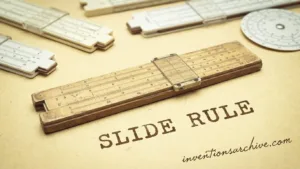
Slide Rule — handheld analog calculator using logarithmic scales for fast computation. Historical context and later changes are included.
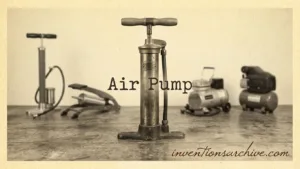
Air Pump moves air to change pressure in a space. Origins, construction, practical use, and later development are set in historical context.
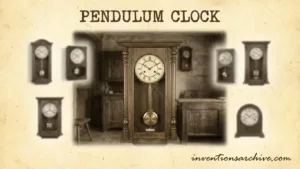
Pendulum Clock — mechanical clock regulated by a swinging pendulum. The record follows its origins, use, surviving evidence, and later development.

Pocket Watch is a portable mechanical timepiece designed to be carried in a pocket, usually on a chain. Its later development is also traced.
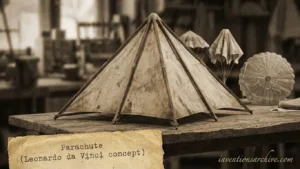
Parachute (Leonardo da Vinci concept) — pyramid-canopy descent device sketched in a Renaissance notebook. Its later development is traced.
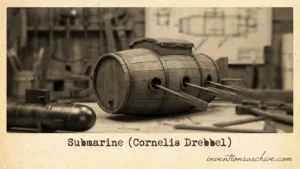
Submarine — leather-sealed wooden submersible rowed from inside for underwater travel. Historical context and later changes are included.
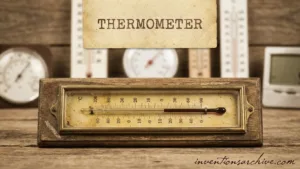
Thermometer — calibrated instrument that indicates temperature through a measurable physical change. Its origins and later uses are considered.
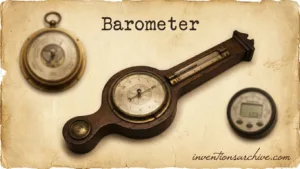
Barometer — atmospheric pressure measuring instrument. The account connects its working method, early record, and later technical influence.

Chain Pump Irrigation is a continuous water-lifting pump using an endless chain with paddles, buckets, or washers. Its later development is traced.
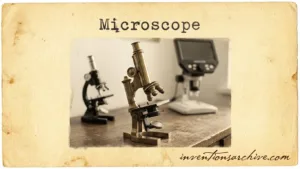
Microscope — instrument that reveals fine details too small for the unaided eye. The surviving record and later development are also considered.

Horse Collar — padded traction collar that shifts pulling force to the shoulders. Historical context and later changes are included.
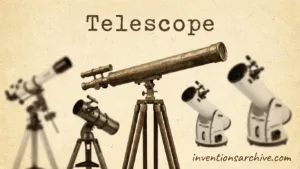
Telescope — instrument that gathers light or other waves to form a magnified, analyzable image. Its origins and later uses are considered.
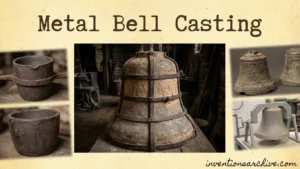
Metal Bell Casting — shaping a bell by pouring molten metal into a bell-form mold and finishing it for sound. Its later development is traced.
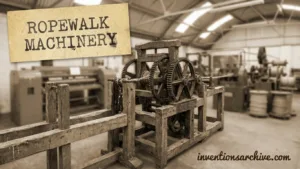
Ropewalk Machinery — mechanized systems that spin, strand, and lay fibers into rope along a ropewalk. Its origins and later uses are considered.