Internet Invention: Who Invented the Internet and When?
The Internet developed through packet switching, ARPANET, internetworking research, TCP/IP, and the connection of many independent networks rather than from…


The Internet developed through packet switching, ARPANET, internetworking research, TCP/IP, and the connection of many independent networks rather than from…
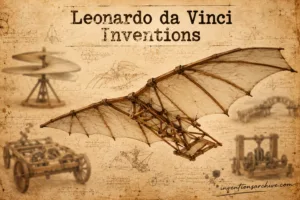
Leonardo da Vinci’s engineering designs survive mainly as drawings, notes, studies, and later reconstructions rather than as a single catalog…

Ada Lovelace’s 1843 notes on Charles Babbage’s Analytical Engine and the published Bernoulli-number procedure later associated with early computer programming….
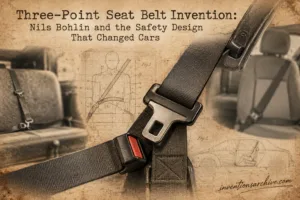
Nils Bohlin’s V-type three-point seat belt, developed at Volvo in 1958 and introduced in production cars in 1959. Invention Name…

Electricity is a natural phenomenon rather than a single human invention; the technologies used to store, generate, control, and distribute…

Frequency hopping as patented by Hedy Kiesler Markey and George Antheil during World War II, with its later development into…
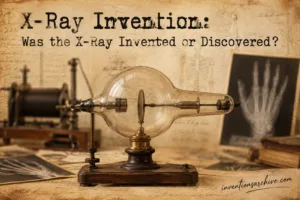
X-rays were identified as a previously unknown form of penetrating radiation in 1895; the machines and imaging methods that use…

Nikola Tesla’s documented inventions are strongest where surviving patents, apparatus, demonstrations, and commercial machines can be matched to specific technical…

The practical turbojet emerged through parallel British and German development during the 1930s. Invention Name Practical turbojet engine Short Definition…
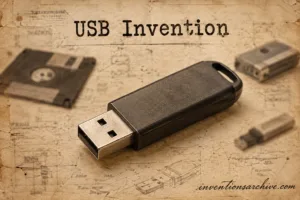
Universal Serial Bus emerged from early-1990s PC interface work and became a formal industry standard with USB 1.0 in January…
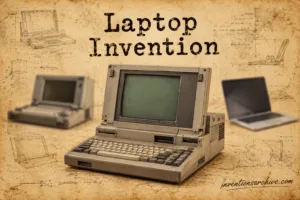
The laptop emerged through several stages of portable computing, so different machines qualify as “first” under different definitions. Invention Name…
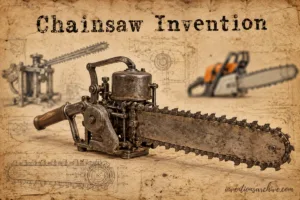
The chainsaw developed through several separate stages, from late eighteenth-century surgical chain saws to portable powered forestry machines. Invention Name…

QWERTY developed through repeated typewriter experiments in the late 1860s and 1870s before becoming the dominant English-language keyboard arrangement. Invention…
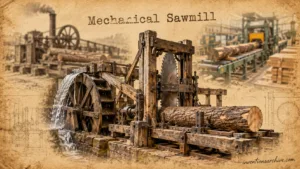
Mechanical Sawmill belongs to medieval invention history; the scope remains centered on the named subject and the period indicated by its assigned category.
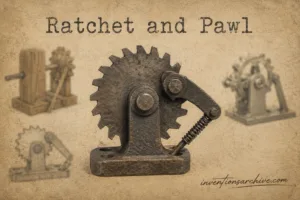
Ratchet and Pawl belongs to medieval invention history; the scope remains centered on the named subject and the period indicated by its assigned category.
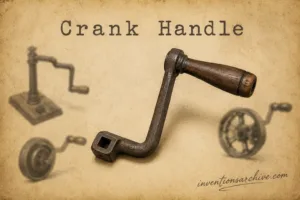
Crank Handle belongs to medieval invention history; the scope remains centered on the named subject and the period indicated by its assigned category.
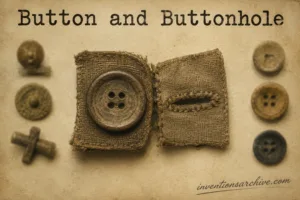
Button and Buttonhole belongs to medieval invention history; the scope remains centered on the named subject and the period indicated by its assigned category.

Chimney belongs to medieval invention history; the scope remains centered on the named subject and the period indicated by its assigned category.
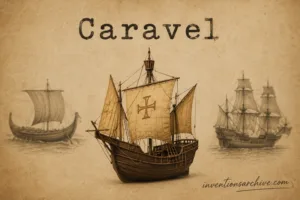
Caravel belongs to medieval invention history; the scope remains centered on the named subject and the period indicated by its assigned category.
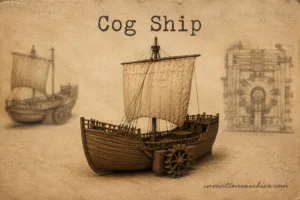
Cog Ship belongs to medieval invention history; the scope remains centered on the named subject and the period indicated by its assigned category.
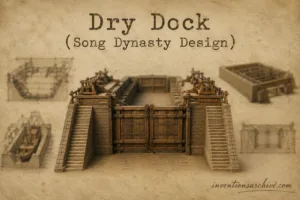
Dry Dock (Song Dynasty Design) is placed in medieval invention history, using the title and category metadata to define the subject.
Pound Lock belongs to medieval invention history; the scope remains centered on the named subject and the period indicated by its assigned category.
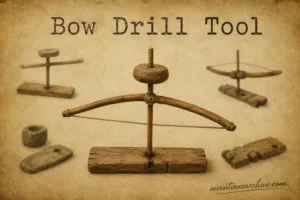
Bow Drill Tool belongs to ancient invention history; the scope remains centered on the named subject and the period indicated by its assigned category.
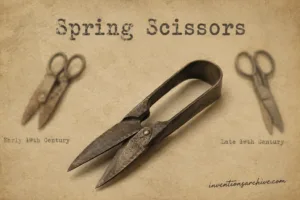
Spring Scissors belongs to ancient invention history; the scope remains centered on the named subject and the period indicated by its assigned category.

Codex Book Format is a book made from separate leaves or folded sheets gathered and bound along one edge. Its later development is traced.
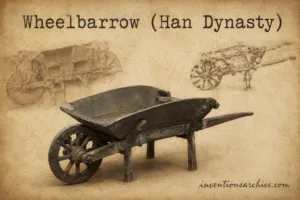
Wheelbarrow is a hand-propelled carrier that places a load on a frame supported partly by a single wheel. Its historical setting is also noted.
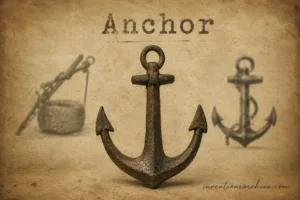
Anchors limit vessel drift through weight, friction, or seabed penetration, with materials, early evidence, uses, and later development traced.

Lock and key systems use matching keys to align internal parts and release or secure fasteners, with their early forms and later development traced.
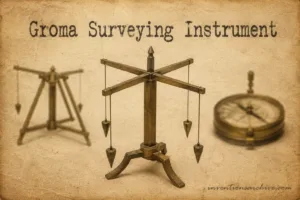
Groma Surveying Instrument used suspended plumb lines to establish straight alignments and right angles. Its later development is also traced.
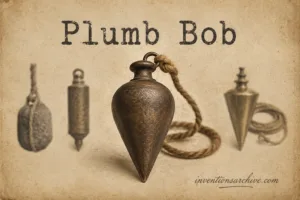
Plumb Bob is a dense weight suspended from a cord to create a visible local vertical reference. Early evidence and later changes are traced.