
| Invention Name | Horse Collar |
|---|---|
| Short Definition | Padded traction collar that shifts pulling force to the shoulders |
| Approximate Date / Period |
2nd century BCE (China) DebatedDetails 12th century CE (Europe, broad use) ApproximateDetails |
| Geography | China; Western Europe |
| Inventor / Source Culture | Anonymous / collective |
| Category | Agriculture; Transportation; Animal traction |
| Importance |
Efficient draft power Faster plowing and hauling |
| Need / Origin Driver | Neck pressure from older harnesses; limited heavy pulling |
| How It Works | Load on shoulder area; traces attach to hames |
| Material / Tech Basis | Leather; dense padding; wood or metal hames; straps/traces |
| Early Use Context | Plows; carts; wagons |
| Spread Pattern | Eurasian exchange Approximate; Europe mainstream by 12th c. |
| Derived Developments | Refined harness sets; improved traction layouts; heavier freight routines |
| Impact Areas | Food production; local trade; logistics; craft supply chains |
| Debates / Differing Views | “First” date and form vary by evidence type (art, artifacts, texts) |
| Precursors + Successors | Yoke; breast strap → full horse collar + mature trace systems |
| Key Cultures / Regions | Early imperial China Approximate; medieval Western Europe |
| Influenced Variants | Dutch collar; hames collar; regional “Chinese collar” styles |
Horse collar technology looks modest, yet it reshaped how animal power could be used. By placing traction on the shoulders instead of the throat, the collar let draft horses pull heavy loads with steadier breathing. That single design choice supported more reliable plowing, smoother hauling, and broader use of horses in everyday work.
Table of Contents
Horse Collar Basics
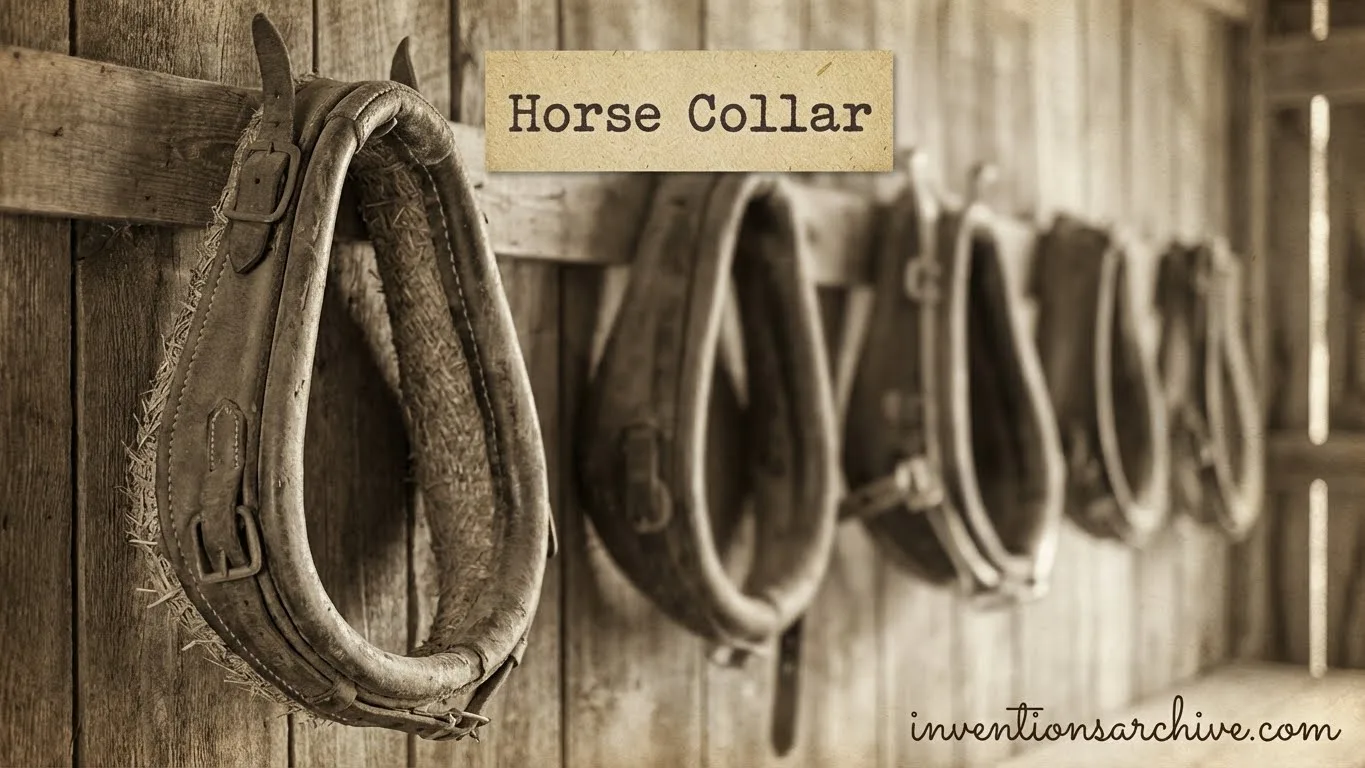
A horse collar is a traction collar used in a draft harness. It encircles the lower neck and rests against the shoulder area, where large muscle groups can manage pulling forces. The collar is often paired with hames—rigid bars that help hold shape and provide secure attachment points for traces.
What Makes the Design Special
- Shoulder traction supports heavier work than neck-based pull points.
- Padding spreads pressure over a wider contact area.
- Trace connections can be arranged for single, pair, or team draft systems.
Early Evidence and Timeline
Dating the horse collar depends on what counts as a “full” collar versus related traction systems. Some sources point to very early Chinese examples, while Western European evidence becomes clearer in the medieval period. The dates below keep that uncertainty visible, using Approximate and Debated labels when needed.
| Period | Evidence | Certainty |
|---|---|---|
| 2nd century BCE | Chinese examples discussed alongside Qin Tomb finds and collar use traditions | Debated |
| 10th century CE | “New” collar noted as new to the Western tradition | Approximate |
| Late 11th century CE | Clear imagery of collar use for plowing and harrowing in the Bayeux TapestryDetails | Strong |
| 12th century CE | Broad use across Europe noted in reference works | Approximate |
| 1855–1875 | Industrial-era adjustable collar examples appear in museum records | Strong |
How It Works
The core idea is force routing. When a horse leans into a padded collar, the push is taken by the shoulder region. That area can handle sustained draft better than the upper neck. With traces attached to the collar’s hardware, the pull line stays stable as the animal moves, keeping traction smoother for plows and wagons.
Pressure Placement
- Collar face: contact surface against the shoulder area
- Padding: spreads load, reduces hot spots
- Stable pull line: keeps traction consistent
Key Attachments
- Hames: rigid supports that carry trace hardware
- Traces: straps or chains transferring pull to the load
- Draft layout: single, pair, or team configurations
Parts and Materials
Across regions and centuries, most horse collar designs keep the same functional pieces. Materials change with local supply and manufacturing style, yet the mechanical job stays consistent.
| Part | Role | Common Materials |
|---|---|---|
| Collar pad | Spreads load across shoulder area | Leather cover; dense stuffing (varies) |
| Hames | Rigid frame for trace attachment points | Wood or metal |
| Traces | Transfers pull to plow, wagon, or sledge | Leather straps; chain links (varies) |
| Back gear | Stability and braking support in harness sets | Leather; hardware fittings |
Types and Variations
“Horse collar” covers several recognizable patterns. Some variations are shaped by work type, others by regional harness traditions. Reference works also describe named forms such as the Dutch collar and the hames collar, each defined by how the collar band and padding are arranged.
Named Forms
- Dutch collar: broad chest band plus a narrower band over the withers
- Hames collar: heavily padded collar with rigid hames surrounding the padding
Regional and Practical Variants
- Chinese collar: shoulder pad with paired hames in documented modern and historical discussions
- Full collar: deep padded profile for sustained heavy draft
- Adjustable collar: opening or sizing mechanisms for fit flexibility
Spread and Adoption
Collar-based traction sits inside a wider story of harness evolution. Ideas about draft efficiency traveled through trade routes, migration, and local experimentation. In Western Europe, visual evidence from the late 11th century shows collars in working scenes, and broad European adoption is often placed around the 12th century. The result was not one sudden switch everywhere, but a gradual widening of where and how horses were used in field work and haulage.
Why Adoption Took Hold
- Better traction for heavier tools and loads
- More consistent pulling across longer work sessions
- Flexible harnessing for single animals or teams
Long-Term Impact
The horse collar increased the practical ceiling of animal draft work. That mattered most where heavy pulling was routine—plowing firm soils, moving goods by cart, and supplying towns. Over time, improved traction supported steadier logistics and a broader role for horses in daily economic life.
Related articles: Stirrups [Ancient Inventions Series]
- Agriculture: more consistent draft for plows and harrows
- Transport: heavier loads with fewer stops
- Local trade: smoother movement of grain, timber, and building materials
- Work specialization: reliable haulage for crafts and supply runs
Horse Collar in Collections
Later examples show how the horse collar kept evolving in materials and manufacturing. A museum record from the University of Reading describes an adjustable horse collar made by the Elastic Horse Collar Co. Ltd. (Birmingham), dated 1855–1875, with a design that can open and clip back togetherDetails. These objects highlight a practical goal that never changed: stable traction with comfortable load distribution.
FAQ
What is the difference between a horse collar and a breastcollar?
A horse collar is built for heavier draft by placing force on the shoulder area. A breastcollar sits across the chest and is commonly associated with lighter pulling needs and different harness layouts.
What are hames, and why do they matter?
Hames are rigid bars that sit along the collar. They provide structured attachment points for traces and help the collar hold shape under load.
When did horse collars become common in Europe?
Many reference works place broad European use around the 12th century. Earlier working imagery exists, and adoption likely varied by region and task.
Is the earliest origin settled for the horse collar?
No single date is universally accepted. Some sources connect early collar use to China, while Western European evidence becomes clearer in the medieval period. Claims about the “first” example are often labeled Debated when they rely on limited or indirect evidence.
Are Dutch collar and hames collar the same thing?
They are related but not identical labels. A Dutch collar emphasizes band layout across chest and withers, while a hames collar emphasizes a heavily padded collar paired with the rigid hames frame.